


If you are an adrenaline junkie, a content creator, or someone who simply wants to capture life from every possible angle, an action 360 camera might be the most transformative piece of gear you will ever own. Unlike traditional action cameras that lock you into a single fixed perspective, a 360-degree action camera captures the entire spherical environment around you — leaving nothing unseen and no moment unrecorded. In this comprehensive guide, we will dive deep into how these cameras work, what makes them stand out, which models deserve your attention, and how to get the best results from your shooting experience.
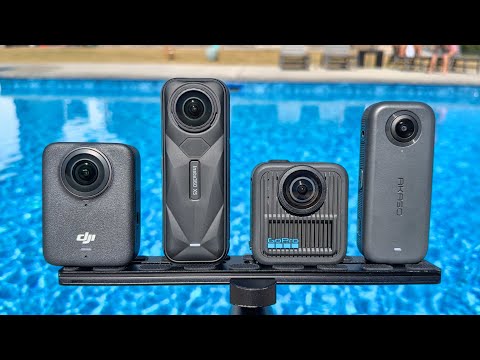
What Exactly Is an Action 360 Camera?
An action 360 camera is a compact, rugged imaging device equipped with back-to-back or multi-lens systems that simultaneously record the entire surrounding environment. The result is an ultra-wide spherical video or image that you can later reframe, rotate, and explore in post-production. Think of it as giving yourself the power to decide what the viewer sees after the shot is taken — essentially turning every recording into an interactive experience.
These cameras are built to handle extreme conditions just like their traditional counterparts. They are waterproof, shockproof, and dust-resistant, making them ideal for surfing, mountain biking, skydiving, skiing, and underwater exploration. What sets them apart is the dual or multi-lens array, typically ranging from two fisheye lenses to six or more lenses in professional setups, which seamlessly stitch together footage into a complete 360-degree sphere.
How the Stitching Technology Works
One of the most impressive aspects of a 360 action camera is its real-time image stitching technology. When both lenses capture overlapping footage simultaneously, the camera’s onboard processor merges the images into a single seamless sphere. Premium models use advanced algorithms and powerful chips to minimize visible seams, color mismatches, and distortion artifacts. Some high-end devices even offer live stitching, allowing you to preview your fully immersive capture in real time through a companion app or viewfinder.
Key Features That Set Action 360 Cameras Apart
When evaluating a 360 action camera, there are several critical features that determine the quality and versatility of your footage:
- Resolution and Frame Rate: Most modern 360 cameras offer 5.7K to 8K resolution per eye, translating to incredibly detailed spherical footage. Higher frame rates like 60fps or even 120fps ensure smooth playback during fast-moving action.
- Image Stabilization: Advanced electronic stabilization and horizon leveling are essential because rolling shutter and shaky footage are amplified in 360 content. Look for cameras with robust in-camera stabilization.
- Lens Configuration: Dual-lens setups are standard for consumer models, while professional rigs may feature four, six, or even more lenses for cinema-grade output.
- Durability and Weather Resistance: IP68 waterproof ratings and ruggedized housings let you take these cameras to places where conventional cameras simply cannot survive.
- Connectivity: Built-in Wi-Fi, Bluetooth, and live streaming capabilities allow you to share immersive content instantly to platforms like YouTube 360, Facebook 360, and VR headsets.
- Audio Quality: Spatial audio capture is becoming a standard feature, adding a critical dimension to immersive 360 experiences.
Top Action 360 Cameras Compared
Choosing the right 360 action camera depends on your budget, use case, and desired output quality. Below is a comparison of some of the most popular models on the market today:
| Camera Model | Resolution (Per Eye) | Lenses | Waterproof (Without Housing) | Price Range |
| Insta360 X4 | 8K | Dual | 10 meters | $400 – $500 |
| Insta360 ONE RS | 5.7K | Dual (Modular) | 10 meters | $300 – $450 |
| GoPro Max | 5.7K | Dual | 5 meters | $300 – $400 |
| Ricoh Theta Z1 | 23MP Photos / 5.7K Video | Dual | Not rated | $450 – $550 |
| Kandao Obsidian | 8K | Triple | No native rating | $500 – $700 |

Each of these cameras occupies a slightly different niche. The Insta360 X4 is widely regarded as the best all-around 360 camera for most creators thanks to its incredible stabilization and 8K resolution. The GoPro Max bridges the gap between traditional action shooting and 360 capture. The Kandao Obsidian offers a unique triple-lens system that provides wider overlap and smoother stitching in complex environments.
Best Use Cases for 360 Action Cameras
The versatility of a 360-degree action camera opens doors to creative applications that traditional cameras simply cannot replicate. Here are some of the most compelling use cases:
- Extreme Sports Content: Whether you are capturing a downhill mountain bike run, a whitewater rafting expedition, or a skydive, a 360 camera lets you experience the full environment — not just a single framed shot. Viewers feel like they are right there with you.
- Travel Vlogging: Walking through a bustling market in Marrakech or standing at the edge of the Grand Canyon — a 360 camera captures the entire scene so viewers can look in any direction at any time.
- Real Estate and Virtual Tours: Architects and real estate agents use 360 cameras to create immersive property walkthroughs that potential buyers can explore interactively.
- VR Content Creation: Virtual reality filmmakers rely on 360 cameras as the primary capture tool. The spherical footage is projected onto virtual environments viewed through VR headsets.
- Educational and Training Videos: Safety training, field demonstrations, and immersive learning experiences benefit from the fully immersive perspective a 360 camera provides.
How to Choose the Right Action 360 Camera for You

Before purchasing a 360 action camera, consider these practical factors:
Your Primary Purpose: If you are mostly creating content for social media and YouTube, a mid-range model like the Insta360 ONE RS will deliver stunning results without breaking the bank. If you are targeting VR platforms or cinematic projects, invest in a higher-end model with superior resolution and stabilization.
Stitching Quality: This is arguably the most important factor. Poor stitching shows visible seams and artifacts that immediately break immersion. Research reviews and sample footage before committing to a specific model.
Workflow and Software: The software ecosystem matters tremendously. Insta360’s dedicated editing suite, for example, offers powerful reframing, stabilization, and editing tools that are intuitive and feature-rich. Check whether the camera manufacturer provides robust post-production software.
Portability and Mounting Options: Since these cameras are often used in dynamic environments, they need to be lightweight and compatible with a wide range of mounting accessories including helmet mounts, chest harnesses, handlebar attachments, and extendable poles.
Expert Tips for Shooting with a 360 Action Camera
- Keep the camera level: Horizon drift is one of the most common issues in 360 footage. Use electronic horizon leveling features and check your horizon before hitting record.
- Shoot in well-lit conditions: 360 cameras generally have smaller sensors, so they perform best in bright lighting. Overcast or low-light environments can introduce noise and reduce detail.
- Avoid pointing directly at bright light sources: The dual lenses are more susceptible to lens flare than traditional cameras.
- Reframe strategically in post: The magic of 360 cameras is the ability to choose your focal point after the shoot. Plan your edits with this creative freedom in mind.
The Future of 360 Action Cameras
The 360 camera industry is evolving rapidly. We are seeing improvements in sensor size, processing power, and AI-driven stitching that were unimaginable just a few years ago. Brands are also integrating machine learning for automatic editing, which can identify the most interesting moments in a 360 recording and compile highlights automatically. Live 360 streaming is becoming more accessible, meaning you can broadcast fully immersive experiences in real time to audiences around the world. As VR adoption grows and platforms like Meta and Apple invest heavily in spatial computing, the demand for high-quality 360 content will only increase.
Final Thoughts
An action 360 camera is far more than a gadget — it is a creative tool that fundamentally changes how you see and share the world. Whether you are a filmmaker pushing the boundaries of immersive storytelling, an adventure enthusiast who wants to relive every moment in full context, or a business owner looking to create compelling virtual experiences, a 360 action camera gives you the power to capture everything and decide what matters later. The technology has matured to the point where these cameras are affordable, portable, and produce genuinely cinematic results. The best time to explore the world of 360 action cameras is now.
Frequently Asked Questions
What is the difference between a regular action camera and a 360 action camera?
A regular action camera like a GoPro Hero uses a single wide-angle lens to capture a fixed-frame shot, while a 360 action camera uses dual or multiple lenses to capture the entire spherical environment. This gives you the freedom to reframe and rotate your footage in post-production, creating an immersive viewing experience.
Can you use a 360 action camera for standard flat video recording?
Absolutely. Most 360 cameras allow you to reframe the spherical footage into a traditional flat video during editing. This feature, sometimes called “bullet time” reframing, lets you extract a conventional action-camera-style shot from the full 360 capture.
How do you edit footage from a 360 action camera?
You need dedicated 360 editing software such as Insta360 Studio, MistikaVR, or Adobe Premiere Pro with the appropriate 360 plugins. These tools allow you to reframe, stabilize, stitch, and add effects to spherical footage before exporting in formats compatible with YouTube 360, VR headsets, and social media platforms.
Are action 360 cameras worth the investment for casual users?
For casual users who want to capture unforgettable vacation memories or share immersive moments on social media, entry-level 360 cameras like the Insta360 ONE RS or GoPro Max offer excellent value. The interactive nature of 360 footage makes it stand out significantly on platforms like Instagram and TikTok.
What should I look for when buying a 360 action camera on a budget?
Focus on stitching quality, stabilization, and the included editing software. A camera with strong in-camera processing and reliable reframing tools in post-production will deliver better results than a cheaper model that simply records raw footage without proper processing support.
Can you live stream in 360 using these cameras?
Yes, many modern 360 action cameras support live streaming directly to platforms that accept 360 content, including YouTube Live. This requires a stable Wi-Fi connection or a connected smartphone acting as a bridge, and the quality depends on your internet bandwidth and the camera’s processing capabilities.