


The Aferiy P280 Portable Power Station has rapidly gained attention among outdoor enthusiasts, emergency preppers, and homeowners seeking a reliable backup energy solution. As power outages become more frequent due to aging infrastructure and severe weather events, having a dependable portable power source is no longer a luxury—it is a necessity. This comprehensive review dives deep into every aspect of the Aferiy P280, from its battery capacity and output options to its real-world performance during camping trips and home emergencies. Whether you are a beginner exploring your first portable power station or an advanced user comparing top-tier models, this guide provides the detailed insights you need to make an informed decision.
What Is the Aferiy P280 Portable Power Station?
Overview and Brand Background
Aferiy is a growing brand in the portable power and solar energy space, known for delivering high-capacity lithium battery stations at competitive price points. The Aferiy P280 sits in the mid-to-high capacity range, offering 280Wh of stored energy—that is roughly enough to charge a smartphone over 20 times, run a mini fridge for several hours, or power essential devices during a prolonged blackout. The unit uses lithium iron phosphate (LiFePO4) battery chemistry, which is widely regarded as one of the safest and most durable lithium variants available today. Unlike cheaper lithium-ion cells, LiFePO4 cells offer superior thermal stability, a longer cycle life, and reduced risk of thermal runaway.
Why the P280 Stands Out
What separates the Aferiy P280 from many budget-oriented portable generators is its thoughtful balance of portability, output versatility, and recharge flexibility. Weighing approximately 5.5 to 6.5 pounds depending on configuration, it is light enough to carry on a camping trip yet robust enough to handle serious power demands. The inclusion of AC outlets, DC ports, USB-A, USB-C, and even car cigarette lighter connectivity makes this one of the more universally compatible units on the market.
Technical Specifications and Key Features
Understanding the specifications of the Aferiy P280 Portable Power Station is essential before making a purchase. Here is a detailed breakdown of what this unit offers:
- Battery Capacity: 280Wh (lithium iron phosphate chemistry)
- AC Output: 200W continuous, with a surge capacity up to 400W
- USB-A Output: 5V/2.4A ports for standard device charging
- USB-C Output: 45W PD (Power Delivery) for faster laptop and tablet charging
- DC Output: 12V/10A car-style port for 12V devices and accessories
- Recharge Time (Wall Outlet): Approximately 3 to 5 hours with a standard wall adapter
- Recharge Time (Solar): Supports MPPT solar input, compatible with 60W to 100W solar panels
- Weight: Roughly 5.5 to 6.5 pounds
- Battery Management System (BMS): Integrated multi-layer protection against overcharge, over-discharge, short circuit, and overheating
Battery Management System (BMS) Details
The BMS inside the Aferiy P280 is a critical component that ensures safe and efficient operation. It continuously monitors individual cell voltage, temperature, and current draw. This intelligent system prevents overcharging during solar replenishment, stops the unit from delivering more power than the battery can safely handle, and automatically shuts down output if internal temperatures exceed safe thresholds. For users who plan to run the power station in hot outdoor environments or inside enclosed spaces, the BMS provides a layer of confidence that cheaper units without robust management systems simply cannot match.
Aferiy P280 vs. Competitors: How Does It Compare?
To truly understand where the Aferiy P280 fits in the portable power market, it helps to compare it directly against popular alternatives. The table below highlights key differences between the Aferiy P280 and two well-known competitors:
| Feature | Aferiy P280 | EcoFlow River 2 | Jackery Explorer 300 |
| Battery Capacity | 280Wh | 256Wh | 293Wh |
| AC Output | 200W (400W surge) | 300W (600W surge) | 300W (500W surge) |
| USB-C PD | 45W | 60W | No PD |
| Solar Input | Yes (MPPT) | Yes (MPPT) | Yes (MPPT) |
| Weight | ~6 lbs | ~7.7 lbs | ~7.2 lbs |
| Recharge Time (Wall) | 3-5 hours | ~1.6 hours (X-Stream) | ~3.5 hours |
| Price Range | Mid-range | Slightly higher | Mid to high |

As the comparison illustrates, the Aferiy P280 offers strong value in terms of capacity-to-weight ratio and port variety. While it may not match the rapid recharge speeds of EcoFlow’s X-Stream technology or the raw AC output of the Jackery Explorer 300, it holds its own as a well-rounded, cost-effective option. Buyers who prioritize affordability without sacrificing essential features will find the P280 particularly appealing.
Real-World Use Cases and Practical Applications
Camping and Outdoor Adventures
For campers and RV travelers, the Aferiy P280 Portable Power Station is a game-changer. It can comfortably power LED lanterns, charge cameras, run small cooling fans, and keep smartphones and tablets topped off throughout a weekend trip. The 45W USB-C PD port is a notable advantage here, as it can fast-charge modern laptops, making this unit viable as a mobile workstation for digital nomads who need reliable off-grid electricity. Pair it with a foldable 60W to 100W solar panel, and you can realistically sustain power indefinitely during sunny camping excursions.
Home Emergency Backup
During home power outages, the Aferiy P280 delivers essential energy for survival and comfort. It can run small medical devices, keep communication devices charged, power a router for internet access, and operate fans or heaters for brief periods. While it is not designed to run heavy appliances like central air conditioning or full-size refrigerators, it excels at keeping critical devices operational for 8 to 15 hours depending on load. Homeowners who layer this unit with a solar panel can effectively create a semi-permanent backup power arrangement that recharges daily during daylight hours.
RV and Van Life
For those living the van life or traveling in recreational vehicles, the Aferiy P280 serves as an excellent supplementary power source. Its compact form factor fits easily into storage compartments, and the variety of output ports means multiple devices can be powered simultaneously without adapters or splitters. The LiFePO4 chemistry is also ideal for RV applications because it tolerates deep discharge cycles far better than traditional lithium-ion alternatives, preserving battery health over years of daily use.
Charging Options and Recharge Flexibility
One of the strongest aspects of the Aferiy P280 is its multiple recharging pathways. The unit supports wall outlet charging via a standard AC adapter, making overnight replenishment straightforward and convenient. Solar charging is equally viable, with the MPPT controller maximizing energy harvest even in partially cloudy conditions. For vehicle owners, the DC input option allows recharging while driving, which is especially useful for road trip scenarios. This triple-charging flexibility means you are rarely far from a way to restore the battery to full capacity.
Experts recommend using an MPPT solar panel rated between 60W and 100W for optimal charging efficiency. Panels with higher wattage will charge the unit faster, but even a compact 60W panel can noticeably replenish the battery within a single day of strong sunlight. It is worth noting that using non-MPPT solar panels will still work but with reduced efficiency, as the charge controller may not optimize the voltage-current relationship as effectively.
Expert Tips for Maximizing Aferiy P280 Performance
To get the absolute best experience from your Aferiy P280 Portable Power Station, consider these practical recommendations from experienced users and power station specialists:
- Prioritize Essential Loads: During outages or camping, focus your power usage on devices that matter most—communications, lighting, and medical equipment. Avoid running high-wattage appliances unless absolutely necessary.
- Pair with Solar Early: If you plan to rely on the P280 regularly, invest in a quality MPPT solar panel from the start. The synergy between the unit’s MPPT controller and a well-matched panel dramatically extends your independence from wall power.
- Store at 50-80% Capacity: For long-term storage, maintain the battery between 50% and 80% charge. This practice preserves cell chemistry and extends the overall lifespan of the LiFePO4 battery.
- Keep Firmware Updated: Some Aferiy models accept firmware or BMS updates via app connectivity. Check regularly to ensure you have the latest performance optimizations and safety patches.
- Monitor Ambient Temperature: Operating the unit in extreme heat or cold reduces efficiency and can stress the battery. Ideally, use the P280 in temperatures between 32°F and 113°F for best results.
- Use Quality Cables: Cheap or damaged cables cause power loss and can even damage ports. Invest in certified, appropriately rated charging and output cables to protect your investment.
Advantages and Limitations: Honest Assessment
Key Advantages
- LiFePO4 battery chemistry offers exceptional safety and longevity
- Wide range of output ports including 45W USB-C PD
- Compact and lightweight for its capacity class
- MPPT solar compatibility for renewable energy recharging
- Integrated BMS with multi-layer protections
- Competitive pricing compared to established brands
Notable Limitations
- AC output surge capacity, while decent, is lower than some competitors
- Recharge speed from wall outlets is slower than premium brands with proprietary fast-charge technology
- Brand recognition is lower than EcoFlow, Jackery, or Bluetti, which may affect resale value and availability
- Does not include a built-in handle in some configurations, requiring a separate carrying case
Who Should Buy the Aferiy P280?
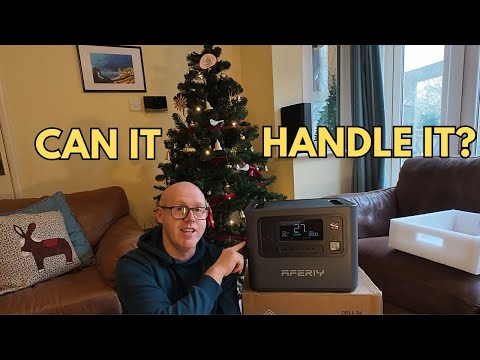
The Aferiy P280 Portable Power Station is best suited for budget-conscious buyers who refuse to compromise on core functionality. Outdoor enthusiasts who need a lightweight yet capable power source for multi-day trips will appreciate the portability. Homeowners preparing for seasonal blackouts or hurricane seasons will find it provides essential peace of mind without breaking the bank. Newcomers to the portable power station world will discover that the P280 offers an accessible entry point with enough sophistication to grow with their needs over time. However, users who require sustained high-wattage output or the fastest possible recharge times should look at higher-tier models from more established manufacturers.
Final Verdict and Conclusion
After thorough evaluation, the Aferiy P280 Portable Power Station emerges as one of the more compelling options in the 250-300Wh portable generator segment. Its LiFePO4 battery foundation, versatile output options, solar charging compatibility, and attractive price point combine to create a product that delivers genuine value. While it may not dominate every single benchmark, it succeeds in the areas that matter most to everyday users: reliability, safety, portability, and practical usability. For anyone searching for a dependable solar generator or emergency backup power station that balances performance with affordability, the Aferiy P280 deserves a prominent spot on your shortlist.
Frequently Asked Questions
1. Can the Aferiy P280 Portable Power Station power a refrigerator during a blackout?
No, the Aferiy P280 is not designed to run a full-size refrigerator. Its 200W continuous AC output is best suited for smaller appliances like mini fridges, fans, lights, and charging stations. A full-size refrigerator typically requires 600W or more during compressor startup, which exceeds the P280’s surge capacity.
2. How long does it take to fully recharge the Aferiy P280 using solar panels?
With a compatible 60W to 100W MPPT solar panel under good sunlight conditions, a full recharge from empty takes approximately 5 to 8 hours. Using a higher wattage panel around 100W can reduce this to roughly 4 to 6 hours depending on solar intensity and panel angle.
3. Is the Aferiy P280 loud like a gas generator?
No. Unlike gas-powered portable generators, the Aferiy P280 operates completely silently because it has no engine. This makes it ideal for camping trips, residential backup use during nighttime outages, and any scenario where noise reduction is important.
4. Can I use the Aferiy P280 while it is charging?
Yes, the Aferiy P280 supports pass-through charging, meaning you can plug in devices while simultaneously recharging the power station itself. However, continuous pass-through use may generate additional heat and slightly reduce long-term battery lifespan if done frequently at high loads.
5. How many times can the Aferiy P280 be recharged before battery degradation?
Thanks to its lithium iron phosphate (LiFePO4) chemistry, the Aferiy P280 is rated for approximately 2,000 to 3,000 full charge cycles before reaching 80% of its original capacity. This translates to several years of regular use, far exceeding typical lithium-ion alternatives rated for only 500 to 800 cycles.
6. Does the Aferiy P280 work with third-party solar panels from other brands?
Yes, the Aferiy P280 is compatible with most standard solar panels that output within the 12V to 20V DC range and use MC4 connectors. However, for optimal charging efficiency and safety, using panels that are explicitly listed as compatible or that match the recommended MPPT input specifications is strongly recommended.